FFI International Group

FFI International Group
"Realeconomik Leadership"

NO EXCUSES - GET IT DONE

Featured post

#BIG #PLAYERS SEE #OIL AT $200 By 2022-End

  OILPRICE.COM Top Oil Traders See Oil Topping $200 By End-2022 By  Irina Slav  - Mar 24, 2022, A number of big oil traders now predict crud...

Search This Blog

Showing posts with label outlook. Show all posts

Wednesday, 2 March 2016

Panic Grows as Moody's Cuts China's Rating Outlook

China  Another  Enron?

Really, when you think about it , what is  the  difference between the two, when they both  are great benefactors of ghosts and zombies and then go on to apply the most opaque and misleading accounting practises, at all levels of organization with utter impunity? No wonder investors and creditors are heading for the hills. To answer the question: there is no difference - and the results are sure to be  the same.

Now  that   brings up the next question  regarding Bernie Madoff...


Moody's Cuts China Outlook to Negative


Factory_in_China cc
US ratings agency Moody's has cut its outlook for China from "stable" to "negative".
While reaffirming its current debt rating, the agency warned that reforms were needed to avoid a downgrade.
Moody's said the change in outlook was based on expectations that Beijing's fiscal strength would continue to decline.
The negative outlook comes on the heels of fresh data suggesting China's economy is continuing to lose steam.
Moody's said it was concerned over China's incomplete implementation of much needed reforms.

High debt burden


"Without credible and efficient reforms, China's GDP growth would slow more markedly as a high debt burden dampens business investment and demographics turn increasingly unfavourable," Moody's said in a note.


'Even God Forgot This Place': Welcome to the Oilfields of Azerbaijan  

https://news.vice.com/article/even-god-forgot-this-place-welcome-to-the-oilfields-of-azerbaijan
It's unlikely that any European Games spectators will make it to Balakhani, yet the coveted crude that fuels what was the world's first oil industry was originally dredged from this exact spot. In 2013, while Europe was still bleakly trudging through recession, Azerbaijan sold an average of 880,000 barrels of oil per day, and was one of the world's fastest-growing economies for several years.


To be sure, the bond promptly surged, even as the stock priced tumbled, on what was seen as a very bondholder-friendly action (and thus to the detriment of shareholders) and hit a price of 95 cents while the stock tumbled by 15%, generating a 30% return for anyone who had decided to go along. At that moment we urged anyone in the trade to take their profits and go home, taking a few weeks, or the rest of 2016, off.


Today, the equivalent of those bankers are shareholders. They expect not just interest, but tremendous returns on their initial investments. They witnessed the success of Facebook and Google and want those sorts of returns, too. So they put money into a company like Twitter, and then expect to earn back 100 or 1,000 times on their original investment. The fact that Twitter makes 500 million dollars a quarter is considered an abject failure by the investors. And so Twitter must look for some way to “pivot”—that is, change from a super successful company that lets people send 140-character messages, into something else.


China  Prepares  Massive  Lay-offs and Compensation


Beijing has prepared a plan to lay off five to six million state workers in the next three years, Reuters reports. According to the media, the authorities are aiming to tackle overcapacity and pollution and have prepared lots of cash to prevent social unrest.


Remember  Ghost  Cities?
(Curator's  Vdeo Note) 


China will spend 150 billion yuan ($23 billion) in compensation for laid-off workers in just the coal and steel sectors. The overall job cut could reach 5-6 million workers in sectors facing a supply glut, the media reports, quoting two ‘reliable’ sources close to the Chinese leadership.

The figure will grow according to the report, as more spending will be needed to help other industries. China will also have to pay to handle the debt left behind by ‘zombie’ state companies. These are firms that continue to operate even though they are insolvent or near bankruptcy; some of them continue to pay workers fearing the social impact.


READ MORE

https://www.rt.com/business/334108-china-layoff-steel-coal/ 
 
Plus more...

http://uk.reuters.com/article/us-china-economy-layoffs-exclusive-idUKKCN0W33D

Free Logo From Thefreelogomakers.com


Wednesday, 2 September 2015

Policy-Makers Will Save Stock Market At All Costs, & More


 Who knows what will trigger Fed intervention; that information is asymmetric, i.e. only known to Fed insiders.
Correspondent Bart D. recently speculated that the U.S. stock market was now "too big to fail," that is, that it was too integral to the global financial system and economy to be allowed to fail, i.e. decline 40+% as in previous bubble bursts.
he U.S. stock market is integral to the global financial system in two ways.Now that investment banks, pension funds, insurers and multitudes of 401K retirement plans are dependent on current equity valuations, a crash would impair virtually the entire spectrum of finance from hedge funds to banks to insurers to pension plans.
A decimation of these sectors would impact the U.S. economy and thus the global economy very negatively.


Asean's biggest companies tempt fate with sixfold debt jump since '98 crisis


Total obligations at Wilmar, which grows oil palms, doubled to US$22.4 billion since 2010, while net debt rose 20 per cent. The jump was partly due to its expansion into the sugar industry, the company said by e-mail on Aug 28, adding that revenue rose ...


 China's Bond-Rating Firms Dole Out Downgrades


“Many corporates' profitability and debt payment ability are definitely hurt,” he ... Still, Sinosteel's two billion yuan ($313 million) domestic bond has held up well.


NPC adopts new measures as local debt problem looms large


29 the State Council's proposal to cap outstanding local debt at 16 trillion (US$2.5 trillion) in 2015, leaving 1 trillionyuan (US$157 billion) for new debt to be ...


REFILE-Fitch warns of downgrade risk in Malaysia's rating outlook


The current account surplus has shrunk from a peak in 2008 to 7.6 billion ringgit in the second quarter this year, down from 10 billion in the previous quarter.


Brazilian Real Falls to 12-Year Low as 

Deficit Projected in 2016


Image result for brazil economy


... have lower immediate social costs but could lead to another credit downgrade. ... response to questions from Bloomberg that growth, fiscal and debt dynamics ...


U.S. Stocks Suffer 3rd-Worst Drop Of Year On Weak China Data

Analyst sees little relief for market other than technical support


U.S. stocks suffered their third-worst loss of the year on Tuesday as part of a global rout sparked by a new round of weak Chinese economic data.
China’s official manufacturing purchasing managers index fell to a three-year low, triggering a wide selloff in stocks across Asia and Europe that then spread to the U.S.
The S&P 500 SPX, -2.96%  sank 58.33 points, or 3%, to 1,913, with all of its 10 sectors in the red. The Dow Jones Industrial Average DJIA, -2.84%  lost 469.68 points, or 2.8%, to 16,058.35. All 30 of its components closed lower.
The Nasdaq Composite COMP, -2.94%  slumped 140.40 points, or 2.9%, to 4,636.10, falling into negative territory for the year.
Tuesday marked the third-biggest daily drop of the year for the S&P 500 and the Dow, while for the Nasdaq, it is the third worst by percentage decline.
“The market is being driven by emotion,” said Robert Pavlik, chief market strategist at Boston Private Wealth LLC.


Disappointing Chinese manufacturing data weigh on global stock markets on Tuesday.


A Passing Thought...


Wednesday, 12 August 2015

China Shocks World With Currency Devaluation On Heals Of Stock Market Collapse, & More


World Markets Shudder,

Expect More Trouble GoingForward


China's currency devaluation ripped global risk markets, but the real fear is that what's behind the move could be a bigger problem for the world economy.
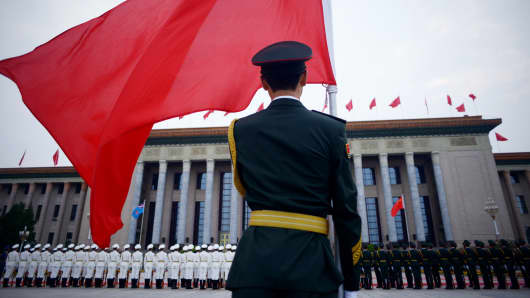
Chinese honor guards outside the Great Hall of the People in Beijing.
Global stock markets fell and commodities were crushed. Emerging market equities were casualties, and currencies from the Mexican peso to the Australian dollar were smacked. The U.S. dollar was higher against a basket of currencies, and buyers moved into the safety of bunds and Treasurys, driving yields sharply lower. The U.S. 10-year was yielding 2.13 percent.
"It's a little bit of damage to the global growth psychology. If the country that's been growing the fastest and been one of the mainstays of global growth momentum ... is allowing their currency to sink a little bit, if they're resorting to that, how bad are things around the world?" said Robert Sinche, chief global strategist at Amherst Pierpont Securities.

China the Ultimate Crony Capitalist State devalues its currency 


 dragon cc


 In case you haven’t noticed things aren’t so hot in China. In fact the country, the Ultimate Crony Capitalist State is in serious trouble. Today it devalued the yuan, its currency.
We have been sounding the alarm on China for a very long time. Not that we’ve been the only ones. That China has been headed for real trouble has been obvious to many for quite a while, years. Regardless, trouble is here now. The world’s second largest economy is pretty much in crisis mode, or very near it and this state of affairs will have an impact (it already has) globally.

What should also be understood is that this is not a separate episode from the initial financial crisis which hit much of the world in 2008. China, Greece, Japan, it’s a continuation of the Great Recession. We’re not out of it. Indeed, some believe that we likely have not seen the worst of it.


Mexico's central bank on Tuesday said it sold $107 million of $200 million offered in an auction to support the peso currency at an average price of 16.3274 pesos per dollar. (Reporting by Mexico Newsroom)


Russian state companies and banks are cutting staff and scrapping projects as they prepare for another surge of foreign debt repayments of at least $35 billion before the end of the year amid falling energy export revenues and a weaker rouble.


A man walks past the Bank of Japan (BOJ) building in Tokyo, June 24, 2015.  REUTERS/Toru Hanai


apanese analysts are sharply cutting their economic growth forecasts for the year amid expectations that activity shrank in the second quarter, a survey showed, piling pressure on the central bank to trim its own rosy projections.


The central government’s debt hit a record high of ¥1.057 quadrillion at the end of June, up by some ¥3.87 trillion from the end of March, according to the Finance Ministry. The national debts, or the combined balance of outstanding Japanese government bonds, financing bills to cover temporary funding shortfalls and borrowings, increased due to rising social security costs, including on medical care and pensions, amid the aging of society.


Image result for russian banks

The ruble slid the most in emerging markets as the biggest drop in China’s yuan in two decades drove down oil prices and sparked concern Russia’s exports to its largest trading partner will be curtailed.


Industrial Production Falls 

In June


Industrial production across the eurozone declined more than expected in June, rounding off a weak second quarter and indicating that lackluster investment continues to restrain economic activity.
The European Union's statistics agency said Wednesday that production at factories, mines and utilities fell for the second straight month in June, down 0.4% from May. Economists polled by The Wall Street Journal had forecast a monthly decline of 0.1%.
The data, coming ahead of Friday's publication of gross domestic product estimates, "shed a concerning light on the manufacturing recovery in 2015" as some of the region's main trading partners are going through a weak growth spell, said Bert Colijn, an economist at ING Bank.
A cooling Chinese economy prompted Beijing on Tuesday to devalue its currency, while data on Monday showed that Russia's economy moved further into recession in the second quarter.


Learning Success: 

APPLY Tips From The Best


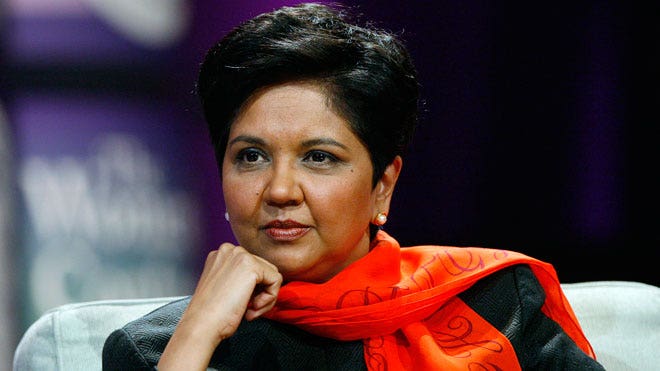
PepsiCo, another of 100 Most Powerful Women - Forbes, has not only led her company to record financial results but is making strides to move PepsiCo in a healthier direction, leading the courageous charge to shed traditional fast food properties and to replace them with initiatives to supply healthier foods. She is deeply caring and committed as a senior executive. She is a fun-loving executive as well—she played lead guitar for an all-woman rock band in college, loved to play cricket, and is known to sing karaoke and perform at corporate gatherings to this day. Yes, I have been known to relate to her fun-loving spirit as a senior executive as well.


Top Weekly Ideas and Insights


An Inconvenient Truth


"Eurasia BIG Bang" 


What Happens When Geo-Political Shifts Occur?


EXISTENTIAL REALITY 


"Humanity's Coming of Age"

 - Last Days: Hegemony or Survival -


Most All-timePopular Posts

DREAM BIG, ACHIEVE SMART