FFI International Group

FFI International Group
"Realeconomik Leadership"

NO EXCUSES - GET IT DONE

Featured post

#BIG #PLAYERS SEE #OIL AT $200 By 2022-End

  OILPRICE.COM Top Oil Traders See Oil Topping $200 By End-2022 By  Irina Slav  - Mar 24, 2022, A number of big oil traders now predict crud...

Search This Blog

Showing posts with label Brazil. Show all posts

Thursday, 3 March 2016

Financial Advisors - What EVIL Lurks?

Who Can You Trust?

The  question  would receive a resounding reply from Bernie Madoff's clients, no doubt. But don't rely on regulators or institutions to provide effective preventative controls. That's naive.

Three ways you can work to mitigate the evils of wayward advisors is to first employ two or more well-recognized practitioners to handle your affairs. A little competition goes a long way to keeping everyone on the up and up.

Secondly, consider employing only " fee-based hourly" advisors who are not so interested in generating commissions. The downside is that they are generally not as incented or aggressive and  that may be  a handicap  in both good or bad markets.

Lastly, do you homework!


It Just Got Even Harder to Trust Financial Advisors  


If you haven't yet checked your adviser's disciplinary record, you will after reading this.


There's a phrase no one wants to read in a sweeping report about the financial advisers who handle their savings: economy-wide misconduct. 

A new working paper by business school professors at the University of Chicago and University of Minnesota found that 7 percent of financial advisers have been disciplined for misconduct that ranges from putting clients in unsuitable investments to trading on client accounts without permission. That's a troubling mark for an industry that relies on the trust of clients. And some large, well-regarded firms have misconduct records that far exceed the average. Nearly 20 percent of financial advisers at Oppenheimer & Co., with more than 2,000 advisers counted in the study, have misconduct records, according to the new paper.
"It's everywhere, not just small firms. It is pervasive," said Amit Seru, a finance professor at the University of Chicago's Booth School of Business and a co-author of "The Market for Financial Adviser Misconduct."
READ  MORE 


The euro hit its lowest in almost three years against the yen while European shares extended their strongest run of the year on Tuesday as data from around the region bolstered the case for more ECB stimulus next week


Japanese Prime Minister Shinzo Abe will pull together a new advisory panel to debate the need for a supplementary budget for the coming fiscal year from April to stimulate the flagging economy, sources told Reuters on Tuesday.


Australia's net foreign debt has expanded beyond $1 trillion for the first time on record.


It's Official: Canada Has Sold All Of Its Gold Reserves


One month ago, when looking at the latest Canadian official international reserves, we noticed something strange: Canada had sold nearly half of its gold reserves in one month. According to the February data, total Canadian gold reserves stood at 1.7 tonnes. That was just 0.1 per cent of the country’s total reserves, which also include foreign currency deposits and bonds. 
As we noted, the decision to sell came from Finance Minister Bill Morneau’s office.
“Canada’s gold reserves belong to the Government of Canada, and are held under the name of the Minister of Finance,” explained a spokesperson for the Bank of Canada on Wednesday. “Decisions relative to gold holdings are taken by the Minister of Finance.”


READ MORE  


Monday, 29 February 2016

HSBC: YIKES - Arab States Going Broke!

How many businesses can withstand a drop in revenues of 50% or more and expect to survive? Few,  if any! With oil prices being down by that percentage, expect many of the resource based countries to start defaulting on their debt and thereby crashing the global banking system along with the stock markets. It will cascade!

It was all a house of cards built on an exuberant credit bonanza fueled by unprecedented low loan rates that was doomed from the start. Now here comes the payback - and it won't be pretty.

All things revert to the mean - that's the first  law of common sense, just ask Soros!


Arab States Face $94 Billion Debt Crunch on Oil Slump, HSBC Says


Gulf Cooperation Council countries may struggle to refinance $94 billion of debt in the next two years as the region faces slowing growth, rising rates and rating downgrades, according to HSBC Holdings Plc.

Oil-rich GCC states have to refinance $52 billion of bonds and $42 billion of syndicated loans, mostly in the United Arab Emirates and Qatar, HSBC said in an e-mailed report. The countries also face a fiscal and current account deficit of $395 billion over the period, it said.

Expectations that these funding gaps "will be part financed through the sale of sovereign U.S. dollar debt will complicate efforts to refinance existing paper that matures over 2016 and 2017," Simon Williams, HSBC’s chief economist for the Middle East, said in the report. "With the Gulf acting as a single credit market, the refinancing challenge will likely be much more broadly felt" and "compounded by tightening regional liquidity, rising rates and recent downgrades," he said.

READ MORE

The Game Changed in Venezuela  
People continue to be arrested merely for protesting, and a long established local Human Rights NGO makes an urgent plea for an investigation into widespread reports of torture of detainees. There are now dozens of serious human right abuses: National Guardsmen shooting tear gas canisters directly into residential buildings. We have videos of soldiers shooting civilians on the street.


Washington warns top banks to stay away from Russian bonds   

Russia’s dollar-denominated 2023 bond now has a yield of 4.53 percent, sliding from 4.9 percent in September 2013 when Moscow raised $7 billion, data from the Financial Times showed.
According to the WSJ, some bank officials, including those at Citigroup, said they won’t participate. Goldman Sachs and J.P. Morgan Chase say they are still weighing their options.


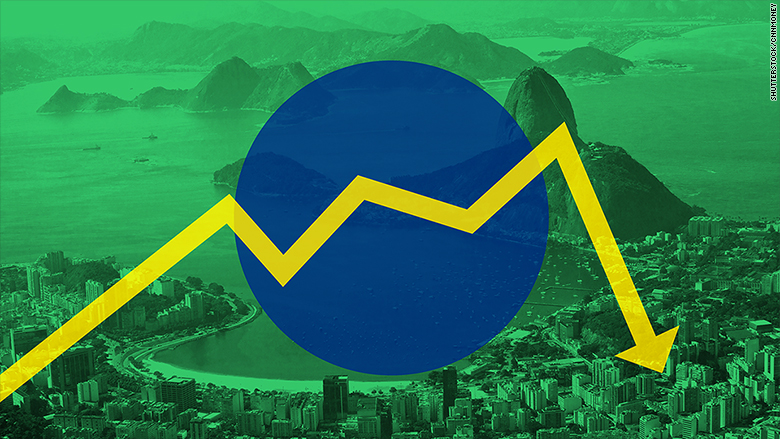
Moody's Downgrades Brazil Sovereign Rating 

 Itau Unibanco Holding SA, Banco do Brasil SA and Banco Bradesco SA were among more than two dozen financial firms in Brazil that had credit ratings cut by Moody’s Investors Service after it stripped the nation of an investment grade this week.


Ratings affected in the latest shakeup included baseline credit assessments and bank deposit and debt ratings, New York-based Moody’s said Thursday in a statement.
While the moves were prompted by the change in the sovereign rating, Brazilian banks’ creditworthiness “may also face downward pressure if Brazil’s very challenging operating environment results in a deterioration of their financial fundamentals, particularly profitability, asset quality and capitalization,” Moody’s said.
Brazil was cut two steps below investment grade, to Ba2, with a negative outlook, a sign the rating might go lower. The downgrade came one week after Standard & Poor’s reduced Brazil’s rating to BB, also two steps below investment grade with a negative outlook. The moves reflect Brazil’s worst recession in more than a century, a nationwide corruption scandal and declining demand from China for Brazilian commodities.

Why Singapore's Economy Is Heading For An Iceland-Style Meltdown


It has been just five years since the Global Financial Crisis, and the world – in brazen defiance of the lessons of 2008 – is already back to blowing massive bubbles and naively praising the countries that are benefiting from these “fool’s gold” economic booms. The Southeast Asian island nation of Singapore is currently inflating one of the most egregious examples of these post-2009 bubbles, and is displaying parallels to Iceland’s bubble that are causing me to believe that its boom will end in a similar (but not necessarily identical) manner.

READ MORE

http://www.forbes.com/sites/jessecolombo/2014/01/13/why-singapores-economy-is-heading-for-an-iceland-style-meltdown/#346ffdb113cc


Monday, 14 September 2015

It Makes No Sense To Raise Fed Rates, & More News


Why The Fed Would Be Insane To Raise Rates: The Rising U.S. Dollar


The USD strengthening since last July is the core driver of the global recession.
The parlor game of the moment is laying odds on the Federal Reserve's decision to raise rates, leave rates unchanged, or (gasp!) hint at future stimulus. There are certainly a multitude of inputs to the Fed's decision, and a variety of potential consequences, but only one really matters: the effect on foreign exchange/currency markets.

It's not that difficult to understand the one dynamic that matters. If the Fed raise yields/interest rates in the U.S., that makes the U.S. currency, i.e. the U.S. dollar (USD), more attractive.
Higher yield = more attractive, especially when coupled with the liquid market for U.S. Treasuries and the relative safety of the dollar vis a vis other currencies issued by falling-into-recession nations and trading blocs.

Jim Simons was a mathematician and cryptographer who realized: the complex math he used to break codes could help explain patterns in the world of finance. Billions later, he’s working to support the next generation of math teachers and scholars. TED’s Chris Anderson sits down with Simons to talk about his extraordinary life in numbers.


The AP reports that some driver advocates like the Center for Auto Safety were concerned that this pledge doesn’t do enough to get automatic breaking systems into cars. Those advocates would rather the government legally require cars to have automatic breaking systems, instead of rely on a voluntary promise to keep drivers safe. Another concern is that automatic braking systems are generally sold as add-ons to luxury vehicles, which would put them out of reach of most consumers


Credit default swaps are contracts that let investors buy protection to hedge against the risk that corporate or sovereign debt issuers will not meet their payment obligations.
The market peaked at $58 trillion in 2007, according to the Bank for International Settlements, but shrank to $16 trillion seven years later as investors better understood its risks


One often wonders why governments indebt themselves for so much more than they can ever hope to pay… Here, Western economists, bankers, traders, Ivy League academics and professors, Nobel laureates and the mainstream media have a quick and monolithic reply: because all nations need “investment and investors” if they wish to build highways, power plants, schools, airports, hospitals, raise armies, service infrastructures and a long list of et ceteras, economic and national activities are all about.


This ranking sorts 61 countries by price, earnings needed to buy a gallon, and annual income spent on fuel.

BRASÍLIA — The president of Brazil should have been ecstatic. She had just won re-election after an intense campaign in which she fiercely defended her role in making Brazil, for a few fleeting years, a rising star on the global stage.
But in the days after her victory last October, President Dilma Rousseff was worried, confronted in private deliberations with her closest advisers by signs that Brazil’s triumphs were at risk of coming undone.
“We went too far,” Aloízio Mercadante, Ms. Rousseff’s chief of staff, acknowledged publicly this month, describing the sense of alarm as the dust settled after the election and Ms. Rousseff and her aides grappled with the weaknesses in Brazil’s economy.


A Passing Thought...


Wednesday, 19 August 2015

Rock Star China Analyst Paints Bleak Picture, & More


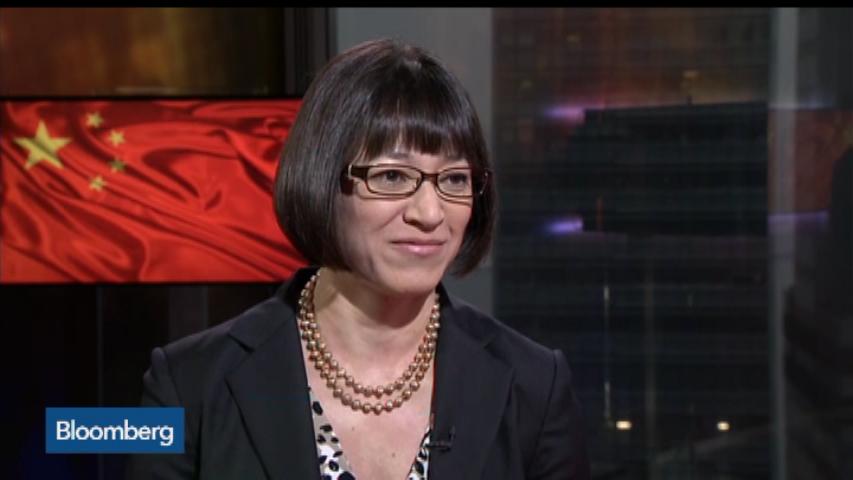
There are China analysts, and then there is Charlene Chu.
She has been called a rock star of Chinese-debt analysis. Money managers the world over pay tens of thousands of dollars for access to her research at her new firm Autonomous Research. Her reports are rarely leaked, and she rarely gives interviews.

Business Insider got a glimpse at a massive report she wrote at the end of July.

This was when everyone was freaking out about the precipitous fall of China's stock markets, and it predates the Chinese authorities' decision to devalue the yuan.

Her base case in the report was for Chinese authorities to maintain stability of the equity market and forestall contagion.There is also a doomsday scenario, however, in which there is contagion to other domestic and international markets, large capital outflows, and an acceleration of problems associated with financial-sector weakness and corporate indebtedness.

The report said: "This in turn would likely lead to a significant pullback in credit, putting the brakes on GDP growth and bringing an end to China's decades of stellar economic growth. At that point, social and political stability — the critical wild cards in this equation — could come under question."

This is what doom looks like


Greenspan warns about bond-market bubble


: Former Federal Reserve Chairman Alan Greenspan is sounding the alarm about a bubble that he believes is forming in the bond market.
In two television interviews in recent days, Greenspan said interest rates could shoot higher and derail the economy when the bubble bursts.
The former Fed chairman says the current situation in the bond market is comparable to what happens in the stock market during an equity bubble.
Noting that stock-market bubbles are typically characterized by extreme price-to-earnings ratios, Greenspan said extremely low yields are telling a similar tale for bonds.
“If you turn the bond market around and you look at the price of bonds relative to the interest received by those bonds, that looks very much like the usual spread which would concern us if it were equities, and we should be concerned,” Greenspan said in an interview with Fox Business Network.


Growth in OPEC’s biggest exporter will slow to 2.8 percent this year and 2.4 percent in 2016 after oil prices slumped, the Washington-based IMF said in a statement on Monday. If spending isn’t curbed, its fiscal deficit would be “very large” this year and over the medium term, it added.


“Moody’s isn’t the only one predicting that growth will be slow to rebound,” said Ari Santos, a trader at Sao Paulo-based brokerage H.Commcor. “Looking forward, we’ll have a stagnant economy, with no growth and no outlook to grow.”


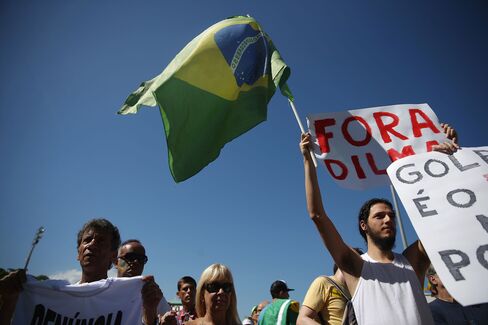
Protesters calling for the impeachment of President Dilma Rousseff march along Copacabana beach on Aug. 16, 2015.
In the midst of its deepest economic and political crisis in a generation, Brazil is contending with a business climate so punishing that major projects across numerous sectors are being frozen or shrunk, while small businesses slash prices and shift focus.


Singapore-based wealth managers, already under pressure from a global move towards tax information sharing, face a more immediate threat as Asian countries including Indonesia and India look to chase undeclared money in the low-tax city state. A global crackdown on tax evasion launched during the 2008 financial crisis has already forced Switzerland and other European offshore hubs to surrender their prized bank secrecy.


The combined deficit of private sector DB schemes in the UK

 now stands at around £900 billion, up from £250 billion

 since the start of the millennium, despite companies pouring

 in £500 billion towards pension saving over that time.

 According to Hymans Robertson, the stark figures highlight

 that for too long pension schemes have been taking too 

much risks


Learning Success: 


APPLY Tips From The Best


Larry Page,  Google – 


Image result for larry pageLarry Page is another example of a businessperson who can persevere any challenge. Larry and his company have faced much criticism and received ample praise over the years for his company’s actions. But in the midst of the storm, he has never let what others think sway him from pursuing the course for his company that he considers the best.


Top Weekly Ideas and Insights


An Inconvenient Truth


"Battle For Oil" 


What Happens When Political Interests Get Desperate?


EXISTENTIAL REALITY 


"Coming To The End Of Oil Age"

 - Looking Beyond The Brink -


Most All-timePopular Posts

DREAM BIG, ACHIEVE SMART