FFI International Group

FFI International Group
"Realeconomik Leadership"

NO EXCUSES - GET IT DONE

Featured post

#BIG #PLAYERS SEE #OIL AT $200 By 2022-End

  OILPRICE.COM Top Oil Traders See Oil Topping $200 By End-2022 By  Irina Slav  - Mar 24, 2022, A number of big oil traders now predict crud...

Search This Blog

Showing posts with label history. Show all posts

Tuesday, 11 August 2015

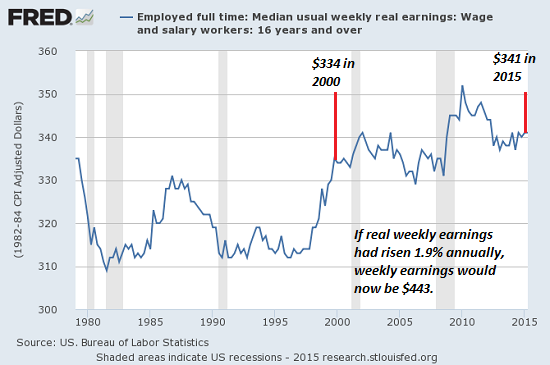
Since 2000 Real GDP Grew 31.6%, But Wages Are Flat? & More


s


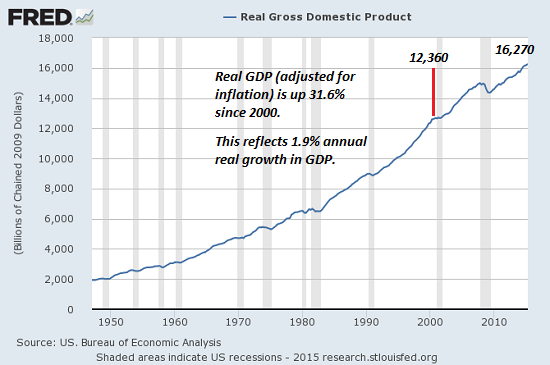
Where Did the GDP "Growth" Go? Not into Wages


How can the economy grow by roughly one-third in real dollars while real median household income drops like a rock?
Based on gross domestic product (GDP), the U.S. economy has grown smartly since 2000: GDP rose from 10,031 in 2000 to 17,840 in mid-2015. That's an increase of 77.8%.

A Tale of Two Charts


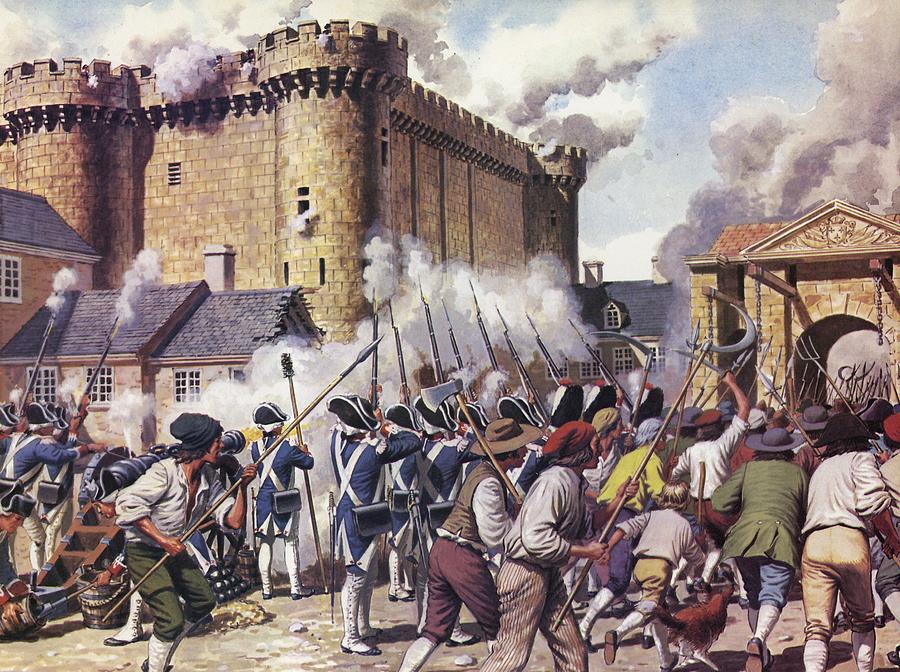
Ironically - the same old French story - Storm the Bastille?


The Permian Basin in West Texas remains one of the few bright spots compared to other shale basins in North America. Drilling there is still profitable, with low costs and existing infrastructure. A series of pipelines have come online in West Texas over the past year, eliminating the discount that Permian oil traded at compared to the WTI benchmark. The Wall Street Journal notes that RSP Permian (NYSE: RSPP), a Permian driller, successfully sold new equity, a sign that investors are still keen on drillers in the basin. RSP sought to raise funds to complete acquisitions and the company raised $157.5 million by selling new stock this week. There is a lot of speculation about when and to what extent lenders and equity investors will pull out of the shale sector, but RSP’s successful offering demonstrates that there is still an appetite for shale companies among investors.
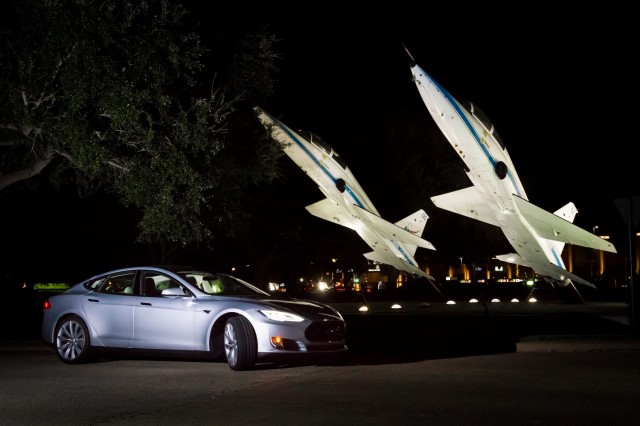


  With just one model on sale to support all its R&D, it's understandable why a share sale might be on the horizon. When you look at Tesla's finances the same way that GM and Ford report theirs (generally accepted accounting principles, or GAAP), the company lost nearly $15,000 per car this last quarter. Although Tesla says this number is more than covered by income from EVs it leases direct to customers, designing and developing cars is neither cheap nor simple, and the company will need cash to grow into a multiple-model lineup.


Farmer Ryan Rogers checks on a generator at Homestead Dairy in Plymouth, Indiana, which invested in a biogas recovery system whiThe Environmental Protection Agency estimates that more than three million tons of greenhouse gas emissions were eliminated last year by Homestead and the 246 other US livestock farms which have installed biogas recovery systems.
That's equivalent to taking more than 630,000 cars off the road.
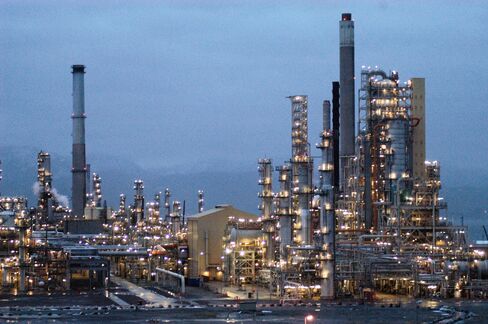


The Mongstad oil and gas refinery, part-owned by Statoil ASA, is near Bergen, Norway.
Oil is losing value just as investments in the petroleum industry are heading for the biggest drop since 2000. To cope with the shift, companies such as Statoil ASA started restraining spending more than six months before Brent crude started to tumble.


As Economic Malaise Grows, Brazil 

Budget Deficit Hits All Time Record


June’s result means that the government's budget deficit reached a record breaking 8.1% of GDP -- one of the highest across emerging and developed economies and the highest in Brazil since the beginning of current data in 1995. 


Learning Success: 

APPLY Tips From The Best


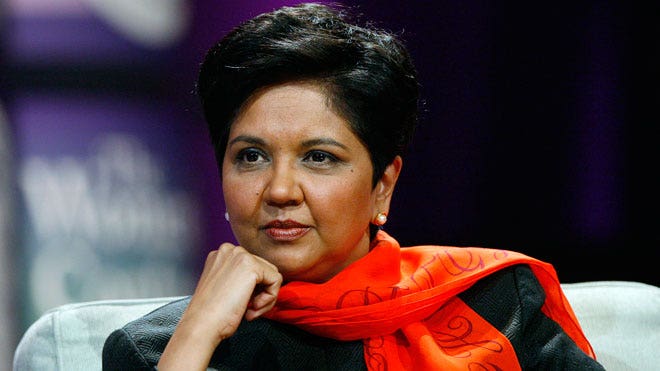
Indra Nooyi,  PepsiCo , another of  100 Most Powerful Women - Forbes, has not only led her company to record financial results but is making strides to move PepsiCo in a healthier direction, leading the courageous charge to shed traditional fast food properties and to replace them with initiatives to supply healthier foods. She is deeply caring and committed as a senior executive. She is a fun-loving executive as well—she played lead guitar for an all-woman rock band in college, loved to play cricket, and is known to sing karaoke and perform at corporate gatherings to this day. Yes, I have been known to relate to her fun-loving spirit as a senior executive as well.


Top Weekly Ideas and Insights


An Inconvenient Truth


"Eurasia BIG Bang" 


What Happens When Geo-Political Shifts Occur?


EXISTENTIAL REALITY 

"Humanity's Coming of Age"

 - Last Days: Hegemony or Survival -


Thursday, 11 June 2015

Bloomberg #NEWS - US Stocks Uncharted Waters; Crash Imminent

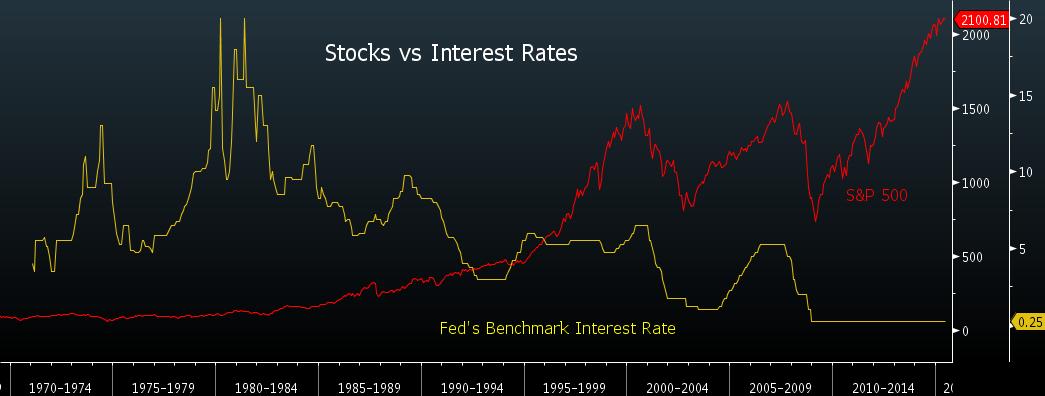
U.S. Stocks on Wrong Side of History With Rate Rise in Sight


THIS COULD BE PROFOUND

Never before has a rally in the U.S. stock market gone on this long without a Federal Reserve interest-rate increase. Expecting valuations to keep rising once one comes is asking too much, if history is any guide.


While Standard & Poor’s 500 Index price-earnings ratios are far from records, they’ve shown no ability to expand after the U.S. central bank starts raising rates, according to data compiled by Goldman Sachs Group Inc. and Bloomberg. In the quarter after the last 12 tightening cycles began, P/Es contracted by an average of 7.2 percent.

It’s something else to worry about as the Fed prepares to lift rates in an economy that is still far from booming. Should policy makers move before January, they would be doing so in a year when U.S. profits are forecast by analysts to increase 1.4 percent. That represents the weakest growth at the start of a tightening cycle since 1980. Read & Watch More


Writing On The Proverbial Wall

Graphic upload

Tuesday, 28 April 2015

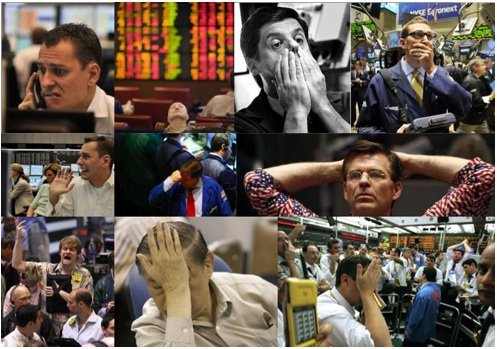
WALL ST Now Panicky Over #Greek Default Risk


Greek default? Wall Street Says Don't Risk It!!!


NEW YORK — Top executives on Wall Street and senior policymakers in Washington are warning their European counterparts not to let Greece default and leave the Eurozone, fearing the market reaction at a time of sluggish growth in the U.S. and instability in the global economy.


Some say they are not as freaked out as they were in 2012 about the prospect of always-in-crisis Greece getting kicked out of the Eurozone, which could happen if a deal isn’t reached quickly. Some would even like to let the Greeks go and move on with life. But then people mention Lehman Brothers. And the Russian default. And even an assassination in Sarajevo in 1914. And theoretical discussion of how better prepared the world is for a Greek exit quickly turns into fevered rumination on how it still might spark global financial Armageddon. Read More.


Greeks Seem To Be A Bit Unnerved TOO!


Platinum Wealth Partners - Top Investors Edge

It is understandable that Wall St is on edge because the global financial system is so interconnected - a proverbial house of cards. But the problem child does not show any signs of change and could quickly tumble the Eurozone; thereby trigger a roaring ripple around the globe.
.
In the end, Wall Street is not the only one suffering from anxiety attacks.


International Offices
April 28, 2015

Wednesday, 15 April 2015

SPECIAL REPORT: #1 Patterns of STOCK #MARKET CRASHES

SPECIAL REPORT

This exclusive North American article will be broken into a series of five consecutive posts providing our readers with  useful market edges and insights that are unprecedented amoung peers, into the empirical patterns behind historical and "possibly future stock market crashes." The article is sourced and supported by the author's research; having first been published earlier in renowned European journals. Applying such knowledge wisely, thereby optimizes the chances for  better decisions and increased wealth - First Financial Insights, Toronto, April 2015


New stock market crash, a pattern?

Every production phase or civilization or other human invention goes through a so called transformation process. Transitions are social transformation processes that cover at least one generation. In this article I will use one such transition to demonstrate the position of our present civilization and its possible effect on stock exchange rates.


When we consider the characteristics of the phases of a social transformation we may find ourselves at the end of what might be called the third industrial revolution. Transitions are social transformation processes that cover at least one generation (= 25 years). A transition has the following characteristics:

-         it involves a structural change of civilization or a complex subsystem of our civilization
-         it shows technological, economical, ecological, socio cultural and institutional changes at different levels that influence and enhance each other
-         it is the result of slow changes (changes in supplies) and fast dynamics (flows)


Examples of historical transitions are the demographic transition and the transition from coal to natural gas which caused transition in the use of energy. A transition process is not fixed from the start because during the transition processes will adapt to the new situation. A transition is not dogmatic.

 TO BE CONT...

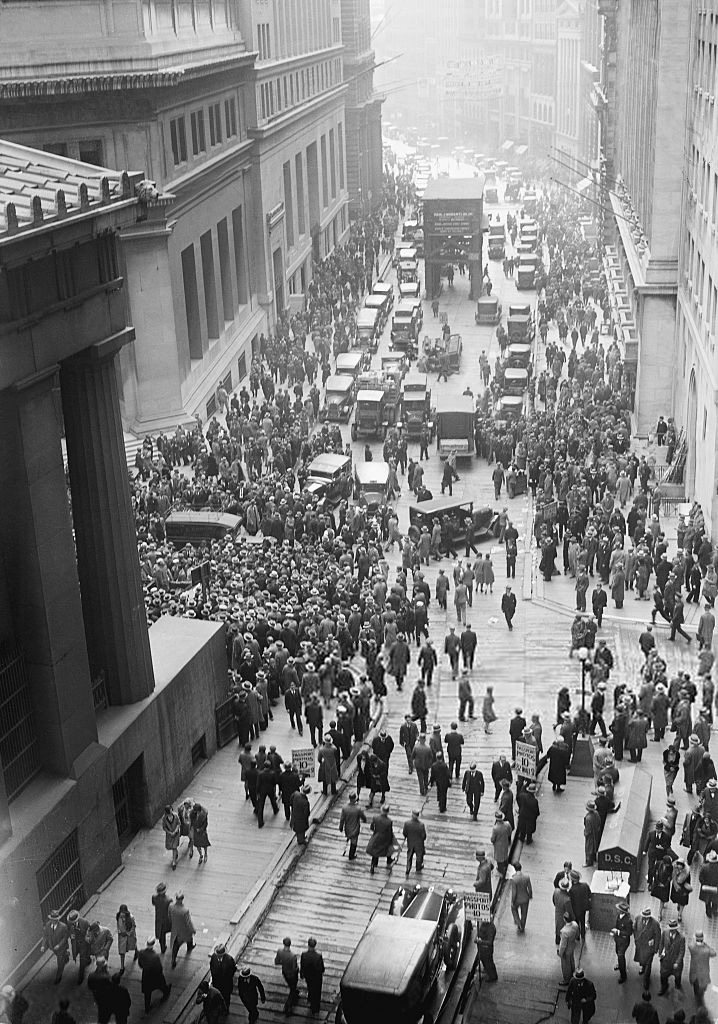
CAN IT HAPPEN AGAIN ? 


The article “A new stock market crash, a pattern?”, in dutch  "Nieuwe beurskrach, een wetmatigheid?” was published  in a magazine “Tijdschrift voor economisch onderwijs” (magazine for economical education), a monthly publication of the VECON, A union of teachers in economic and social subjects in the Netherlands

Tuesday, 25 March 2014

Humanity - The Destroyer of Worlds

Destroyer of Worlds

New research suggests there was no state of grace: for two million years humankind has been the natural world’s nemesis.
By George Monbiot, 
You want to know who we are? Really? You think you do, but you will regret it. This article, if you have any love for the world, will inject you with a venom – a soul-scraping sadness – without an obvious antidote.
The Anthropocene, now a popular term among scientists, is the epoch in which we live: one dominated by human impacts on the living world. Most date it from the beginning of the industrial revolution. But it might have begun much earlier, with a killing spree that commenced two million years ago. What rose onto its hindlegs on the African savannahs was, from the outset, death: the destroyer of worlds.
Before Homo erectus, perhaps our first recognisably-human ancestor, emerged in Africa, the continent abounded with monsters. There were several species of elephants. There were sabretooths and false sabretooths, giant hyaenas and creatures like those released in The Hunger Games: amphicyonids, or bear dogs, vast predators with an enormous bite.
Professor Blaire van Valkenburgh has developed a means by which we could roughly determine how many of these animals there were(1). When there are few predators and plenty of prey, the predators eat only the best parts of the carcas. When competition is intense, they eat everything, including the bones. The more bones a carnivore eats, the more likely its teeth are to be worn or broken. The breakages in carnivores’ teeth were massively greater in the pre-human era(2).Not only were there more species of predators, including species much larger than any found on earth today, but they appear to have been much more abundant – and desperate. We evolved in a terrible, wonderful world – that was no match for us.
Homo erectus possessed several traits that appear to have made it invincible: intelligence, cooperation; an ability to switch to almost any food when times were tough; and a throwing arm that allowed it to do something no other species has ever managed – to fight from a distance. (The increasing distance from which we fight is both a benchmark and a determinant of human history). It could have driven giant predators off their prey and harried monstrous herbivores to exhaustion and death.

Most All-timePopular Posts

DREAM BIG, ACHIEVE SMART